



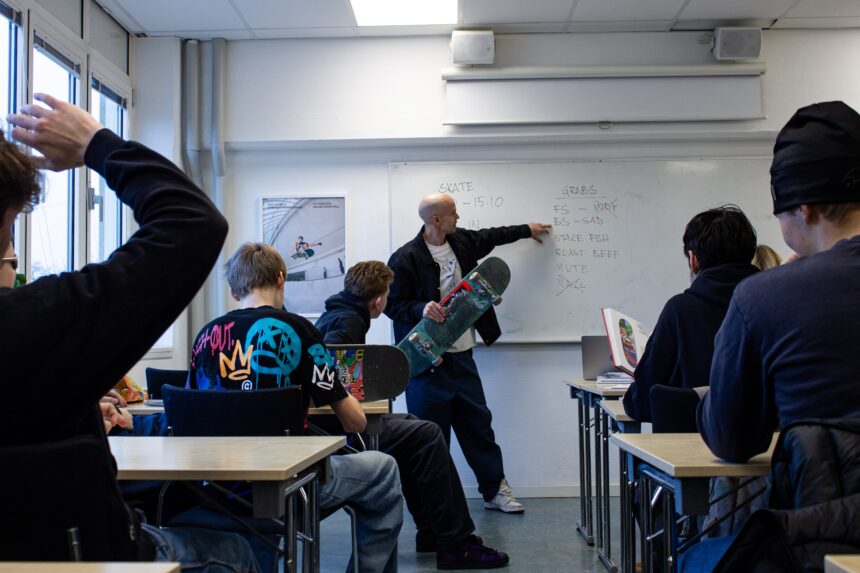
We met Prof. John at the latest “Love Malmö” and we were so impressed by his burning passion and commitment to push skateboarding in a genuine and cultural way. The kind of teacher we all wished we’d had at school. Ok we went quite long.. but, make yourself comfy, take a breath and dive into it.
Cover article Ph. Elias Egeberg
Hi John, how are you?
Great thank you. This thing has been a long time coming. Sorry for answering these questions six months too late. Thank you for your patience!
Don’t worry, we know that you’re busy. Around the world, you’re also known for your role in building Bryggeriet’s, but you’ve been skating for a very long time yourself. Tell us what Swedish skateboarding was like when you first started, and how it has evolved over the years.
It´s difficult to sum up the story in one answer and most likely impossible to even try without getting nostalgic and romanticizing the old parts. All in all it´s gone from a shit town with no skaters or spots to one of the best places in the world. Every phase has had its perks. When we were outcasts and kids fighting for an indoor park we built identity.
After that we used our club and space to start mags, write, film and later started companies. This built creativity and drive to learn and to try things out.
Then our DIY-build phase was timed with Stapel and the start of the school. This snowballed our scene and people started moving here. It feels like perpetual motion. I often think this is the best time ever only to realize that I am looking forward to an upcoming project or time even more.
Most of all I am happy to be an active part of it still. My job is tough but it is also the fountain of youth as I get to be a part of every new generation coming through turning our scene into what it is. It’s an ongoing process of becoming.
Who were your skate bros back then, and how many of them are still active today?
I still skate with the same people I grew up with. Most are either still skating or involved in one way or another. Pontus obviously runs Polar, Tobias Henriksson, Nils Svensson and John Magnusson are behind the curtains in the land of Oz (read: Bryggeriet) and there are plenty more.
The “kids” I used to see are now adults and have kids themselves. Take Danijel Jugga Stankovich for example. He has done everything in skateboarding and used to be the grom. Now we are close friends and have spent decades together. Right now, one of my classes are working with him for an Eva Hardware capsule for the school´s 20 year anniversary.
Most of us have skated together since we are locked indoors at winter and often see each other at Stapel during summer. There seems to be a seamless bond and it´s hard to know where my “homies from back when” end and the next generation starts. Koffe Hallgren is 40 for example and I used to view him as a “kid” too. And my first students including Sarah Meurle and Jakke Ovgren are turning 38 this year.
It’s not polite to ask the age ehehe.. please continue.
Oh, as for me? I am turning 50 on Groundhog day, February 2nd. Apart from Pontus (Alv) and Danijel Tudorovic I am the youngest in the crew that I grew up with, so I rarely feel old. In relation to my students it´s a different story. Every age has it´s perks but I wish I had the mental stability of 50 when I had the skills of 30.
I also have counselling/coaching clients who are professional skaters and snowboarders. I see that most have magical years between 34 and 38 when they are established, their style is set and mental and physical capacity match.
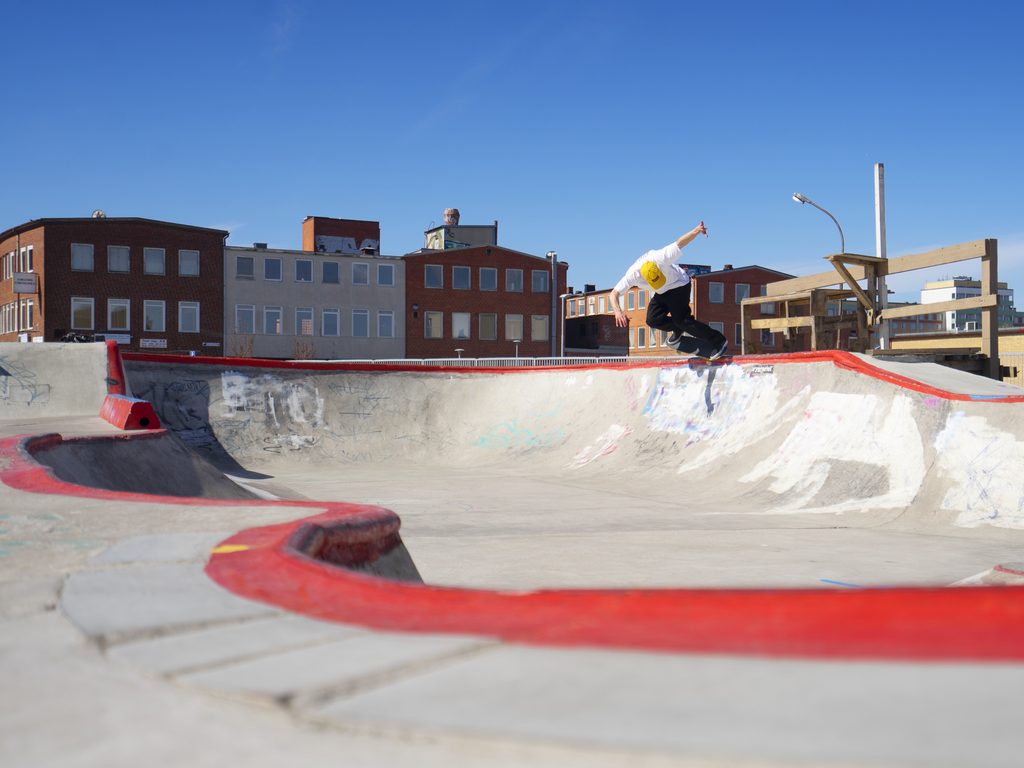
Bryggeriet is open for an Old Bastard session every Saturday. That is where we all meet for brunch and skate. It is an amazing social place holder. It used to be a couple of guys over 30. Nowadays it’s packed and often times looks like a Volcom Wild in the Park final. Same guys as in 2006 and they still RIP.
Looks like now more and more adults are skateboarding..sometimes more than the kids, Here’s the question: do you think that now there’s less young skateboarders? Somebody’s talkin’ about a generation of skateboarders that we’re missing
I think there is a gap. Skateboarding seemed to miss a generation when it was going through a weird phase where it seemed like Vogue or the Olympics dictated a lot of what skateboarding should look like. This is all cool, glamourous and created a lot of opportunity for some but it was detached from the experience that most skaters had in the streets and made it hard to relate to. My guess is that that generation didn´t quite understand what it means to be a skater because skateboarding as a whole had some kind of identity crisis. But that´s just my 25 cents.
What’s been your biggest achievement in skateboarding?
Achievement? What does that even mean? There is a certain part of me that wants to keep skateboarding away from quantification and results, still I am part of turning it into a school subject with grades and all. It´s a catch 22, but I think my biggest achievement is to find ways to be part of this skate thing in new ways for every phase and role that I play in it. The school is celebrating 20 years this year and if I look at some of the stuff we have done and things I have gotten to experience I see that there is probably not a high school teacher in the world that has gotten to do what I have done and seen. Sorry to dodge the question. I don´t know? My biggest achievement is that I am still searching for Animal Chin.
Keep searching for him, but now we know that, Peter Pan’s syndrome aside, you’ve been a skateboarder for a long time. Do you think being a “lifer,” and having what we might call that “street cred,” helped in the founding and development of the skate school?
No one with any street cred should ever claim street cred. Another Catch 22….
Great book, by the way
As for the way we have worked with skateboarding in school a few things seem to have worked:
First off, we are not a sports program but an art program. This allows for everyone, no matter what kind of skater you are, to explore skateboarding the way you want. Competing for gold is just as valuable as to have fun or film or whatever you feel. I think this is one reason why so many good skaters and creative people have come out of here. The mix seems to enhance rather than limit.
I made a promise to myself early on never to do anything to my students that I wouldn’t do myself. I also run all my assignments and ideas past my students first. That way I know they are onboard and hopefully that gives them a sense of us doing education together rather than school imposing it on them. This gives, if not street cred, at least teach cred. And often times those are the same.
I think the scene and Malmö is important too. We are not a secluded part of the scene but located in the middle of it. Sprung from the scene the whole project was verified from the get go.
And last but not least, over time the alumni are the best ambassadors. To have their support and to be able to use them as mentors and guests give more cred than anything else. This can be used to inspire and build a bridge between the school desk and the real world in a powerful way. We have friends in all walks of skateboarding and I am beyond grateful for the support we get. But none of it would be possible if former students didn´t vouche for us. That is where 100 % of the street cred comes from.
How did the project come about? What was the spark that got everything started?
Long story short, Sweden has a law that allows for NGOs and even companies to start schools. The skatepark applied for a school permit and formed a new NGO to be a high school. The initial idea was to use the skatepark and connecting premises for education during daytime when the park was closed. This was in 2006.
I was hired to set up the skateboard subject and just had to learn on the job. There was skateboarding in high school in Stockholm already so we knew it could be done. People often refer to Bryggeriets gymnasium as the first school with skateboarding. It is not, but what stands out is that skateboarding is intertwined in the whole education with a skatepark in school and skate-based design class and film class. Other than that, it is normal subjects too.
What were the biggest challenges in the beginning, both logistically and in terms of permits/approvals?
I was so naïve, stupid and inexperienced. I think those were the key factors to why it worked at all. The first hurdle was to get students to apply to a school with no history or anything to back up the education. Our first principal, Martin Erberth, told me last year that when he was hired there was no budget to start the school. It is tax funded and the first money came in a month after the students started. So, for the first two months we worked with no money. A loan, DIY approach and hope that enough students would apply got us through. I had no idea. He wanted to save us the stress so he kept it to himself! Somehow, we made it. We invented everything along the way and after three years we were a full school.
In the beginning the reputation of skateboarding and the fact that we hadn’t proved ourselves yet were big hurdles for students to convince their parents.
Nowadays the reputation is about of caring and a small school that does things with the students. I know parents who want their children to attend because they got a lot out of skateboarding themselves as teenagers. That’s a big change.
Year one I had a student who told his parents he went to another school across the street from us. They were very angry when they found out! But on graduation day they were both happy and proud. Times have changed…
Your story can be found online and on the website, but could you give us a summary of how Bryggeriet’s Gymnasium has evolved over the years?
I am writing a book on it, that will hopefully be published within the next 6 months. I have been writing it longer than it took to produce Fully Flared, but it´s coming. The working title is Skate and Educate.
To make it simple I think we first managed to establish skateboarding in high school without ruining the creative and fun part of skating. And kept the education as a whole serious and valid.
What started as an experiment and almost a joke has proven to tick a lot of boxes that “regular” school struggle with. Motivation, movement, self educationa and creativity the educational system tries to achieve. In skateboarding many of those things are part of the DNA. Scholars and educators from all over the world have shown interest for this and this has given us a voice in the world of both skateboarding as well as education. I am really passionate about this.
This has led to us running a school we can create and education that we want to see. It´s a tall order but we try. Staff as well as students have a lot of freedom here. And with that comes responsibility. And chaos. It is much like skateboarding: We fail ALL the time. But we keep trying.
The Swedish scene — and the Northern European scene in general — has always been really active and fertile, full of talent and a strong drive to create, despite a tough climate. Do you think cold weather, and that urge to get back out and skate after long winters, can be a driving force for young skateboarders?
It´s hard to say but I think the fact that we are forced to be inside at Bryggeriet during winter at least makes sure everyone mixes and interacts. The size of Malmö seems to be good too to make sure no one is too anonymous. The talent and drive among skaters has been a good mix between skate talent, designers, entrepreneurs and just good people who care.
As for the Scandi scene, as well as our school, I find it very interesting that when one person learns it seems like it´s easier for others to do so too.
Personally I have this idea that seclusion can create an overachieving misconception. When a scene is isolated, I think many you have to be extra good, legit, hard core and true to make it. Then when you go to, for example the US, and see that you perhaps overdid it a little you are in a good position. I think this is part of the reason the Swedish music wonders including the Cardigans, Saharah Hotnights and the Hives made it so big. Another funny example is the band Country Side of Harmonica Sam, a country band playing American country inspired by the 1950´s. When they go on tour in the US they are often seen as more legit than local bands because they have gone all in on their niche style.
Sour, Polar and Pekka Löövås are all examples of the same thing in my eyes.
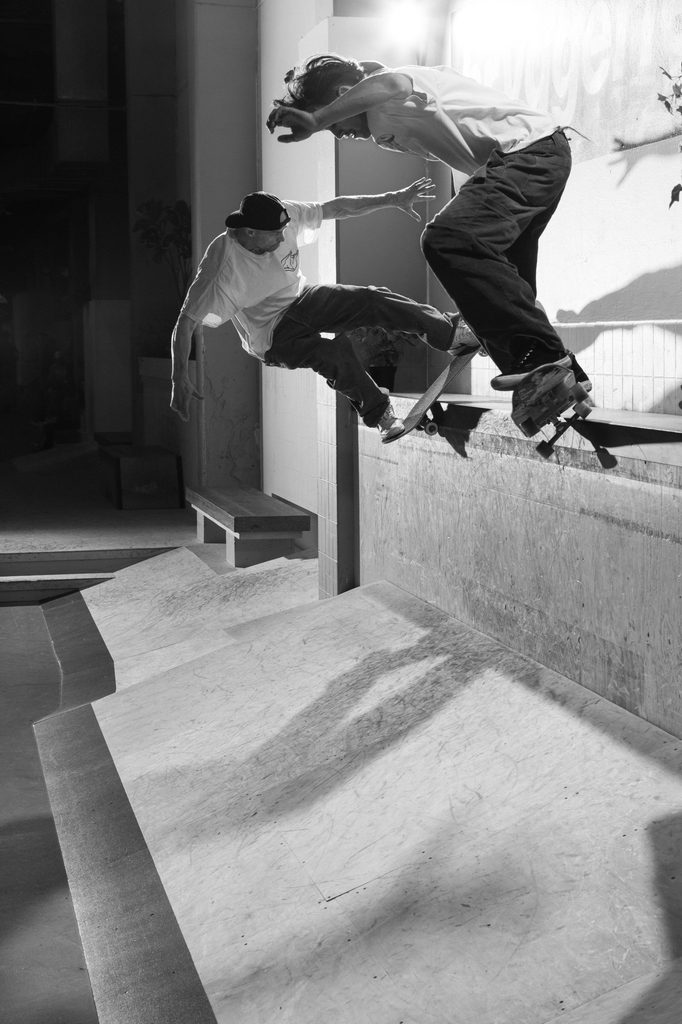
In that context, how did Bryggeriet’s Gymnasium fit in, and how was it perceived by the Malmö community — both by skaters and by local residents?
I don´t think anyone paid much attention in the beginning. It was just a project like any other. By local residents it was seen as unserious I think. Frowned upon. I always like that. I think skateboarding thrives in head wind. And we sort of faked it until we made it. I had no idea what I was doing or getting into.
But soon we got students who seemed to thirve and it helped when some got attention in the skate world. I think today’s students have pride in the schools history and a feeling that they are standing on the shoulders of giants. It makes them proud and many want to make their mark in the school by doing an even better design project, video or school championship than the last. This is how the story grows.
Gustav Svanborg Edén, who is now the skateboard coordinator of the city, used to co-teach with me. He is very ambitious and had a contact with Chris Mulhern at the Berrics. The Berrics was very popular, sort of like Thrasher.com, at the time. He invited Chris to do a piece on us and that was huge in the skate world.
I would have never dared to think that big but after that I realized many people want to contribute and ever since I feel like we have always aimed high. Danijel Todorovich always supported with his contacts and the list of guest lecturers is amazing. BA came right after the Vice documentary and now has my colleague and tattoo artist piece on his chest Charlie. Tony Hawk, Ishod and Janoski are a few others.
And of course alumni like Ville, Sarah, Vilma, Heitor and Tao who are just a phone call away. That means the world to me. Imagine if a soccer school could call Zidane, Maradona, Haugland and Zlatan for class? This is exactly that. But better.
When I go abroad most people know the school but in Malmö it is common that people never heard about it. I find that kinda cool.
Well, considering that Zlatan is a Malmo Homie…. Why do you think the project found such fertile ground in Malmö? How did the city and the country support you in making it happen?
Sweden has a strong tradition of forming associations and funding them. Basically if you are a group of people into the same thing, be it knitting, ceramics or skating you can start an association and get funding. It is part of “bildning” a word used for “furthering yourself as a person” without having to be productive or turn it into a job. It rests on the idea that if one person gets better at something and leads a more meaningful life we, as a society, get better. This is the support bands, teams and others get. Very important in understanding Swedish support.
As for Malmö I think a few things play in. The size for one. It is a big enough place for fitting a lot, yet small enough to keep a scene together. I hear the same thing from skaters as I do for video games developers. They both come from all over the place to get involved. Skaters are in awe cause Heitor or Oski might show up to the spot or hang at the bar. The same goes for game developers. In Silicon Valley this rarely happens they tell me.
But timing has played a big role too. When we grew up Malmö was high in crime and unemployment. In 2001 Malmö started a big metamorphosis as the Malmö University was founded, the shipyard was torn down and gave space to a new part of the city built around innovation and idea-based companies. This is the area where Stapelbäddsparken skatepark is located. Skateboarding as a youthful, action-filled, cool activity played well into that new image. And got the support from the city as we also became old enough to start acting as adults. It was a perfect storm of good things and driven people doing it.
I think Malmö was brave in this but skateboarding brought a lot back. I think many people around the world associate Malmö with skateboarding. That makes me proud.
Do you think this model could be replicated elsewhere in Europe? Have you ever tried to export the project?
This is my big quest. My “model” based around the idea of bringing your passion and interest to school. In many ways it is trying to fit a cylinder into a square hole. Yet, it seems to work and even do things that “regular” education fails to do. It is by no means a finnished concept and it comes with a lot of problems and obstacles. But so does all education.
I get inquiries from all over the world and am lucky enough to lecture and do workshops in many countries and settings. The book I am writing is meant to be used for NGOs, teachers and teams to apply and see if it can be replicated. That would make me so happy to see.
Nothing can be fully copied. It needs to be adapted to the local scene off course, but I hope some of the things we have learnt along the way can help others to at least give it a try.
Please reach out to me if you want input! It takes up a lot of my time to get back to people curious about our work but I feel obligated to do so. Education is the solution to most things. And if I and skateboarding can be used to prep for the next generation to take over I think we all should do our best to support.
Among your students there have been some big names, like Oskar “Oski” Rozenberg, Heitor da Silva, and maybe Ville Wester. Which skaters are you most proud of when you think about the fact that they went through the school you created?
That is like asking a parent which child they love the most! Keep in mind we spend five days a week for three years together. Add to that that it is formative years and many of our students move away from home to come to Bryggeriets gymnasium. This creates a bond and a story with every single student. I know some would make it anywhere in the world and some need all the support they can get. To see someone who failed in school before and come to enjoy school makes me happy. I have gotten to experience that so many times. I can´t say I am proud of that. It is not me. It´s a joint venture. But I feel privileged to be part of those stories. But I won´t mention names. The list would be too long and basically include anyone I ever worked with.
Fair answer… Skateboarding is a game, but it’s also serious business. How seriously is skateboarding taken by the students within your school?
Not very. There is a trajectory over the three years. In year one most are full on skate nerds. In year two most ad another interest to their life plus work, perhaps a partner, turning 18 and getting a tattoo. Skateboarding is all of a sudden not the ONLY thing in life and this can lead to an identity crisis. Very natural and something even the most dedicated skaters go thorugh.
In year three most land on their feet and find a mor long term way to skate. Even the future pros must level their skating with other obligations. And the students who turned DJs, writer or emo in second grade come back and skate in a new more fun and healthy way. I love this. Teaching third year feel like working with collogues more than teaching kids if I do my job right. And after that they are ready to fly.
The mix of die hard skaters wanting to go pro and students who do it just for a fun way to go to school seem to feed off each other in a way that benefits everyone. The die hard skater needs the filmer and the filmer needs a hype person to get the best out of everyone and the crew needs a spot hunter and photographer etc. It takes a village. And that is what we are.
But at the same time it is very serious. You get a grade in the course and it can help you get into university. But it’s not how good you are doing tricks, more about how you plan and take care of your progress etcetera. I don´t think grades are driving anyone here to learn tricks. They do that because they really want to. What if that happened more often in other subjects too? A student begging the teacher for one more try after flunking the Math test for the 20th time. There is a beauty in the meaninglessness of it too. Putting in an hour to do a smith grind just for the sake of it. In other classes students want to do the bare minimum. In my subject many stay behind and spend all weekend trying to learn without even thinking about it. Most teachers couldn´t even dream up the stuff qualities that I get to see my students develop. Motivation, grit, goal setting, facing fear, camaraderie and style. Those are pretty good qualities to have in most careers. The joke is not on us anymore. 😉
Have you ever had to tell someone off for skating in the hallways? And how serious were you when you did it?
Every single day. The floors are linoleum and wear out if you skate them. It has become an inverted catch phrase: “Don´t skate in the hallways”. When we made a shoe design project with Stefan Janoski and Danijel Stankovich one group made the swoosh out of linnoleum and placed it on the shoe with Velcro. When you tear it off it said “Don´t skate in the hallways!”
I tell them off but they seem to forget. Youth these days. They’ll never learn.
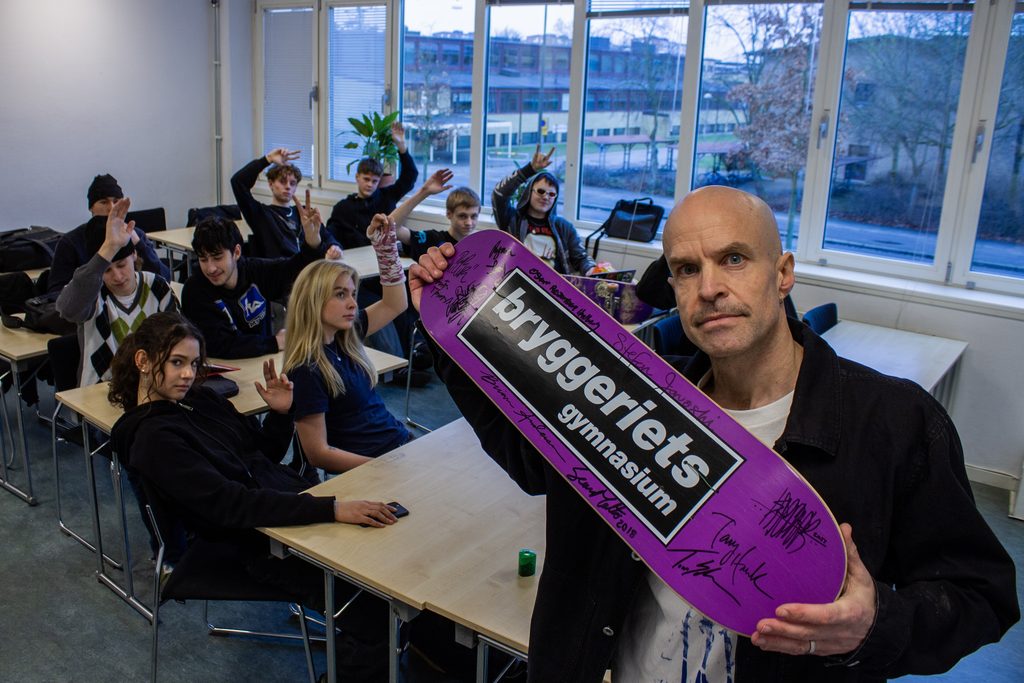
You recently went to Phoenix to present your book — what is it about?
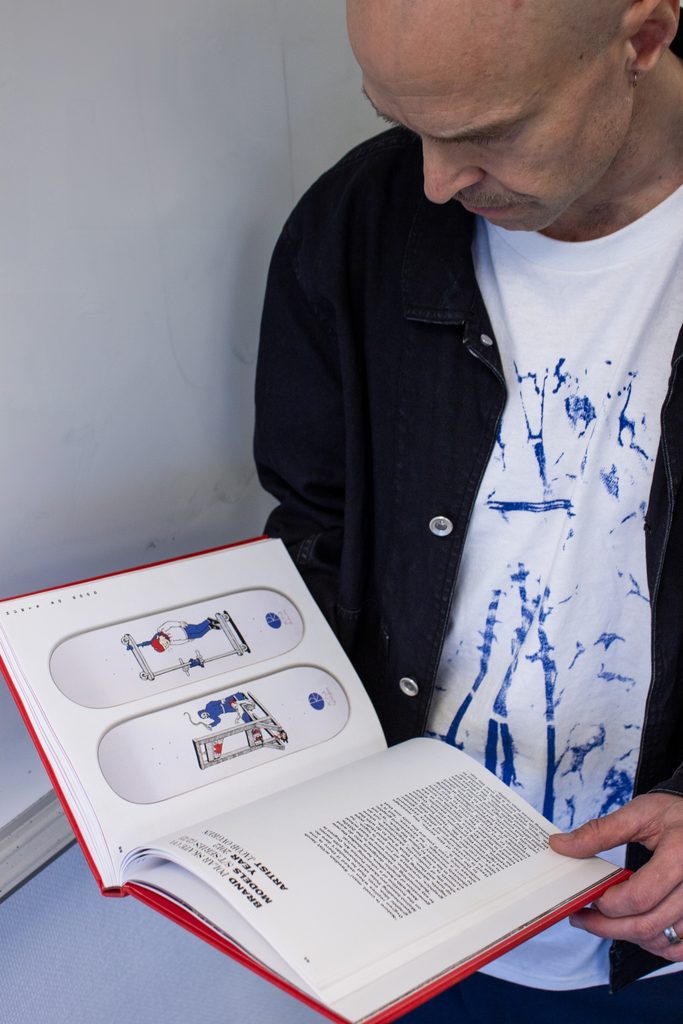
So, I have one book going through layout right now. It is in three parts. The first part is a summary of 20 years of teaching skateboarding and running a school.
The second part is short stories and anecdotes from the classroom illustrating how skateboarding as a school subject works.
The third part of the book is a series of “assignments” that we use in class. They can be used by other teachers, teams, associations or individual skaters to plan and see their progression and development. It is games, experiments and plans.
I have plans, which I presented at Slow Impact in Phoenix to expand on the assignments and collect the 50 most ones and turn that into a separate book.
I know there are sports schools in California where skateboarding and surfing are built into the school curriculum. In your opinion, did the California model come first, or did Bryggeriet? And what are the main differences between the two programs?
I have no idea. But since we are not a sports school per se I think it is like comparing apples and pears. Sport schools are great but we try not to reduce skateboarding to just one thing here. We try to let it be defined by the skater, not by the IOC or anyone else.
Skateboarding is now firmly established in popular culture, and you’ve been among the people promoting the idea of skateboarding as a “sport” as well as a lifestyle. Do you ever miss the rawer side of skateboarding, from back when nobody really embraced it?
Yes, I do. But everything is so much better now. Everything in life is in constant change. I take full responsibility of what it does to a subculture like skateboarding to be placed in a formal environment such as school, but I have never promoted one side more than another. I have a firm belief in “doing” skateboarding with the skaters (read: my students). When done in collaboration with them I think we will never go wrong. I know it´s a risk and the only thing I can do is to be transparent about the premises.
When it comes to organizing skateboarding as a sport I initially heard the organizers say: “It´s all going to be like it ever was.” No one ever said: “We are going to sportify this and put rules to it as we can and see what happens. We´ll take the risk!”
Rules and standards to compare athletes against each other is exactly why you turn something into a sport and I think skateboarding deserves the honesty of what it means.
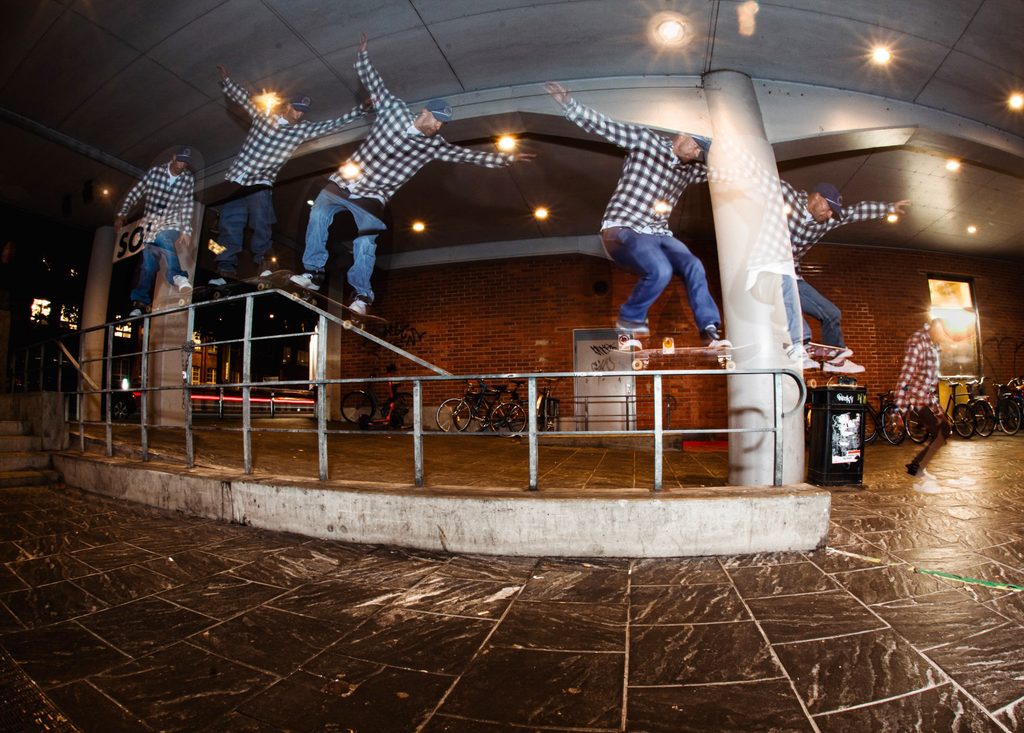
How do you see the current state of skateboarding, both as a cultural phenomenon and as a commercial one?
The question everyone asks! I think Dr. Veith Kilbert did a really good job expleing the state of both skateboarding and social media in his Bubble article. I agree that even the hard core skaters often don´t define themselves as skaters only, fearful of being limited. That seems really stressful – to keep all options open at all times.
I know the industry and world is struggling and redefining itself. The same seems to go for music, skateboarding and consumption as a whole. Keep in mind: the culture will always be here in one form or another, but the industry cannot take a single breath without the culture. Skaters often seem to forget this. Perhaps because they have always been so intertwined.
I fear and I worry that everything will turn sour. But every time we skate I am reminded that the session and feeling is exactly as it ever was. Human interaction and skate session go beyond social media and skills. Lately I have been thinking about the obsession most skaters have with filming. I do to, but there is something to what Nobel literature prize winner.
In your view, what can help skateboarding grow — not just on a technical level, but in terms of becoming more solid and established overall?
I am not sure. I never understood why skateboarding should grow. I want it to be inclusive and open to anyone that wants to skate but that is not necessarily the same as growing it at any cost or way. There is aesthetics, ways and forms that I like in skateboarding and that I personally don´t want to compromise for the sake of growing. If every city had a Rhino park next to the local soccer field and the sport goods shops all sold boards, I am sure skateboarding would grow. Everyone should be allowed to do whatever they want with skateboarding. Otherwise it is not as free as we always say we want it to be. But that doesn´t mean everything is cool.
I want skateboarding to be good not big.
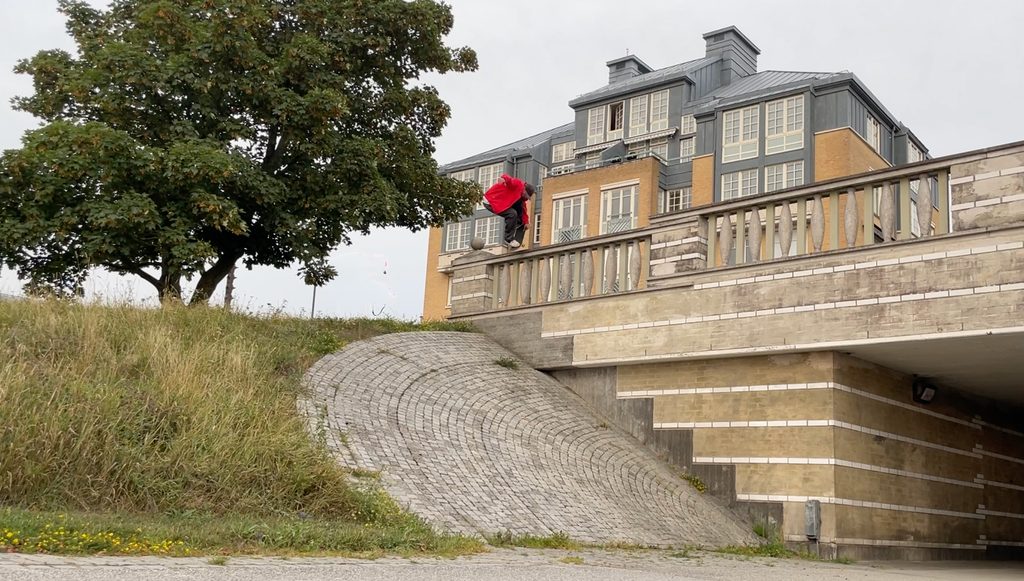
We were recently in Malmö, and the scene there is really interesting. But even there, we noticed a huge number of scooters in the skateparks, especially among younger kids. Do you think skateboarding is losing a bit of its appeal with younger generations?
I think scooters and skateboards are two separate things. Maybe some will pick up a board but most will probably just stop all together. I find it problematic with scooters and their parents. They are allowed in the parks. So is learning to ride a bike on a motor way. But it’s really dangerous and a bad idea. Young kids don´t have the understanding and sight needed to be safe. Standing still in a bowl is always dangerous. For skaters as well as scooters for example. Seasoned skaters run for the platform. Scooter kids tend to gather in the bottom. I hate running into kids that way and the older skater will always look to be at fault running over 5-year-olds. I tend not to skate at all then. I want to decide my own risk taking, I don´t want a 5-year-old to do that for me.
I think it would be reasonable to call social services on parents who let their young children out in skateboard parks. It is a miracle that no one has died yet. Stapel is filled with them and in comes Oski flying into the deep end. I would not want my own child in that scenario.
Skateparks are not kindergarten, now even rollerbladers look cooler than scooters.. talkin’ about other movements, Beyond skateboarding, do you have any plans to incorporate other sports into the program, like snowboarding, BMX, or scooters?
No. Skateboarding is what we know and what we do. Also, we are an art program, so the skateboarding is more of a means of expression, self-evolvement and tool for learning rather than (just) a sport at our place.
Oh great, we’re not gatekeepers, but this is what we were hopin’ to hear from you. Skateboarding doesn’t need anything else in our view too. In Sweden — and in Malmö especially — there are a ton of skateparks. Do you think having so many skateparks helps the scene grow, or does it spread skaters out too much between different spots?
Stapel has become a real meet up spot during summers. Close to tha water and with Le Boxx serving coffee and food it is always packed. There are many bowl based skate parks but only one street park in Malmö. The parks are not that busy usually.
Just like in any city, street skaters meet at the plaza. For us it´s Svampen or Love. If you bike around during a sunny you will most likely find anyone who is skating unless they are hiding at a secret spot for a mission. It´s true though, there are more spots that I want to skate than I have the time to.
Same for us, actually we still love Svampen more than Love, anyway we’d love to have something like that in every city. Is it legal to skate Svampen? Love Malmö is a legal street spot, but we don’t know about Svampen
Svampen is legal and the benches were put there as part of a skate event and then stayed. One of the perks of having a skateboard coordinator in your city. Thanks!
The owner of the book shop, Per, in the public art gallery (Svampen is the area in front of the art hall) noticed that the square used to be empty but when it was made skateboard friendly more people would stop and hang out there cause skateboarding adds movement is something to lean your eyes on. So it was acknowledged as a win – win. It is always appreciated and special when someone like Per points that out. Years later we (the school) was invited to co-exhibit with Korean artist Koo Jeng A to give local connection to an international artist. That was definitely a side effect of skateboarding being so close in sight to the art institution.
Since the benches were put there to skate it could be argued that it is a skate park which raises the question among purists if it´s ok to use the footy in a street part. Please discuss in pairs and send your answers to whocares@gmail.com.
As for Love I had a seminar with a group of students based on an assignment that Ted Barrow came up with. One student put things in perspective as he commented that Love in Philly was illegal and that was one of the challenges that made footy from their extra valuable. He suggested that Malmö should not only take recreate the ledges but also the vibe by making it illegal. In my book that is critical thinking of an A student.
What are your plans for the medium and long term?
I am done filming a part with my dear friend and colleague Makke Bengtsson. The oldest clip is probably three years, and I wish we had more time together but still I am looking forward to finishing it. We are doing a capsule for our 20 year anniversary with Eva Hardware, a design project with Nike Sb and trying to come up with a nice way to celebrate this year. Work, work, work. Sisyphus was one happy guy. Keep that in mind!
My book is the life hammer. I just want to get it out there. Much like a part there is always a sense of not being done and wanting to do better. But it is time to finish and share it. I hope I find a good way to do so.
I turn 50 early next year and hope I get to celebrate with my family and friends.
Come spring I hope to do the same thing I have done the last 40 years: Skate with my friends and find new projects to get involved in.
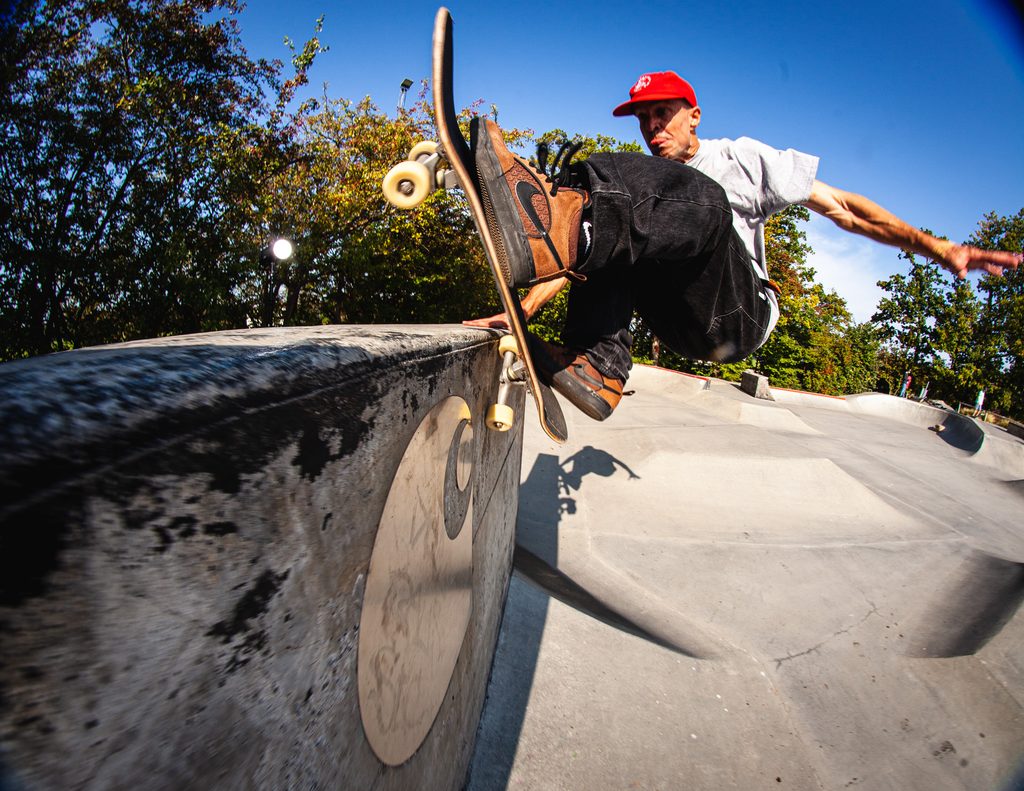
Well, Nobel prize is from Sweden, and you’re writin’ a book about a subculture that became somehow mainstream… can we cross fingers?
If anything, cross fingers that I am blessed with time to just finish it. It´s not going to be Guy Mariano in Mouse. I am aiming for Ben Liversersedge in Penal Code 101A. More that good enough for me.
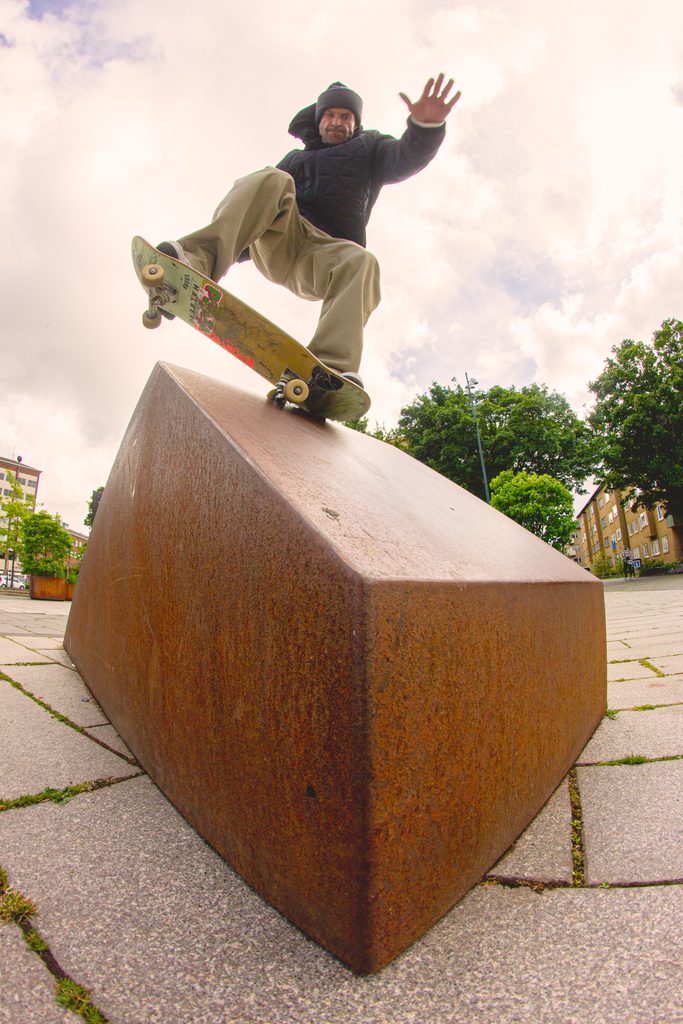
Lookin at the photo, you skate a lot of street. Considering your age (25 right?). Did you ever think in your formative years that you could still go out skate at your current age?
In one word: NO. I have new ACLs and the first time the doctor didn´t understand skateboarding so they told me I wouldn´t skate at all. After that every year and session became a bonus. That is 30 years ago, and I am still grateful to be able to skate at all. That perspective has led me to appreciate in ways that I think you can only do after something is taken away from you.
Just to find a way out, in your vision, what is a no-go in skateboarding. Tricks, gimmicks, style and stuff like that
Interesting question and one that I will not answer. I think of it this way: If skateboarding is truly a gift that my generation can pass on then we should not restrict it. If I tell someone “Here is this great thing for you, but you cannot grab it by the truck, double flip or push mongo, then it´s not really a gift but a loan. All I can do is hope that it is being cared for. But I can´t demand anything.
I just hope that freaks and geeks are still absorbed in the culture because they carry it and don´t have much place in other parts of the world and that I don´t have to witness any cross branding.
Thank you very much Professor John
Thank you! The thoughts are just running wild and I realize how important education and school is to me and how much I want to be good at it. On one hand it is totally pointless, on the other hand it is not. It may not have meaning but it feels meaningful. And if I can provide that urge to understand, learn and try then who cares if it raises our BNP? The objective of my work and a school is to establish learning. In any shape or form.
Now let´s shut up and skate.
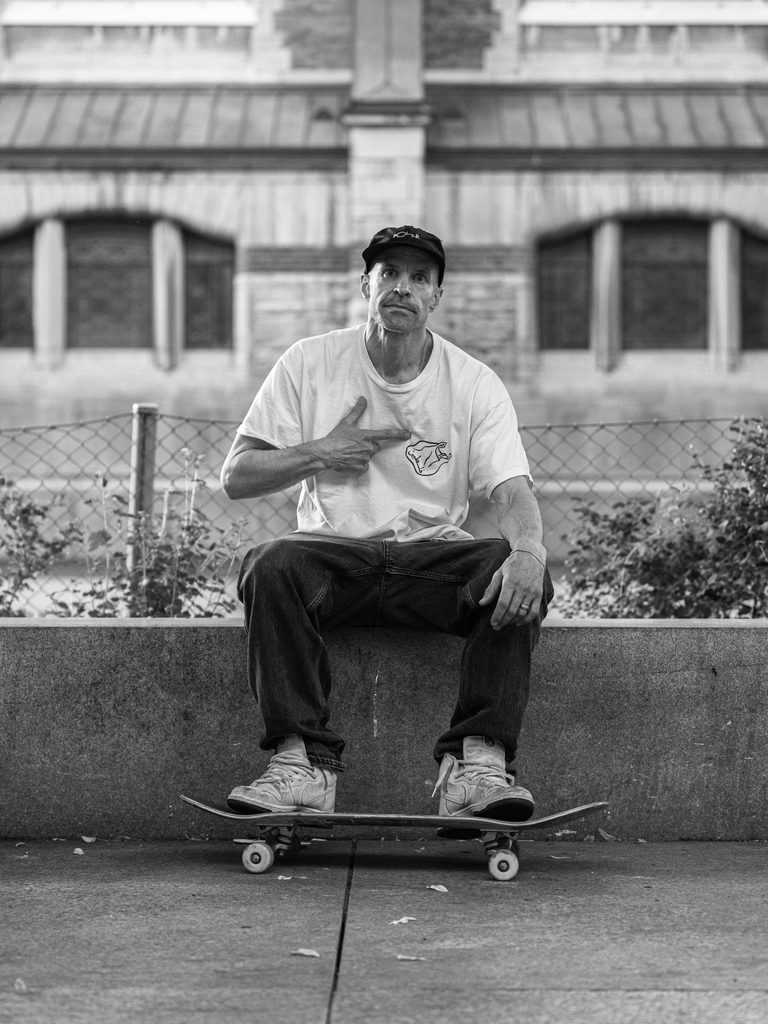
– S